Photographers are always looking for ways to create visually pleasing images and one of the most effective tools is symmetry and patterns in photography. These elements help bring balance, structure, and rhythm to your compositions, guiding the viewer’s eye and evoking a strong emotional response. In this blog, we’ll explore how to use symmetry and patterns effectively to elevate your photography.

Why Symmetry and Patterns Matter in Photography
Humans are naturally drawn to order. Symmetrical arrangements and repeating patterns offer a sense of calm, beauty, and cohesion. When used intentionally in photography, they can:
- Add structure and clarity to an image
- Emphasize mood through repetition or mirroring
- Highlight differences by breaking the expected rhythm
Pro Tip: Use symmetry and patterns to ground your composition, then look for subtle variations or disruptions that add intrigue.
Exploring Types of Symmetry
To use symmetry well, it helps to understand the types most commonly found in photography:
Reflective (Mirror) Symmetry
This occurs when one side of the image mirrors the other, often seen in reflections on water or symmetrical architecture.
Rotational Symmetry
An image that retains its composition even when rotated (think spiral staircases or radial patterns in nature).
Translational Symmetry
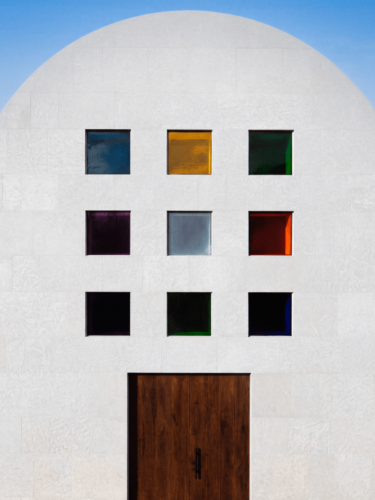
Repetition of shapes or forms in a linear path like rows of windows, trees, or streetlights.
Including symmetry and patterns in photography allows your viewer to settle into the frame and appreciate the underlying structure.

Finding Patterns in Everyday Scenes
Patterns don’t have to be perfectly geometric. You can find them in:
- Textures (brick walls, leaves, tiles)
- Urban elements (fences, sidewalks, shadows)
- Natural forms (flower petals, waves, tree branches)
Use your lens to isolate, repeat, or break these patterns.
Pro Tip: Patterns can be powerful on their own, but breaking them deliberately like placing a red door in a row of white ones can be even more impactful.
Composing with Symmetry and Patterns
When working with symmetry and patterns in photography, composition is everything.
- Use central framing for perfect symmetry, especially with architecture or reflections.
- Try leading lines or diagonals to emphasize repeating elements.
- Frame wide to include more of the pattern or crop in tightly for graphic impact.
Symmetry doesn’t always have to be perfect; slight variations can feel more organic and still create a sense of harmony.
Editing for Emphasis
Post-processing can help you refine your use of symmetry and patterns:
- Straighten lines and crop for better alignment
- Boost contrast to make repeated elements stand out
- Use selective sharpening to draw attention to textures and forms
Pro Tip: Convert to black and white if color is distracting from the pattern, this helps the viewer focus purely on form and composition.

Let Repetition Guide Your Eye
Mastering symmetry and patterns in photography is about recognizing the rhythm in your environment and choosing how to highlight or disrupt it. These elements provide structure while allowing room for creativity and emotional depth. Whether you’re drawn to the precision of architecture or the chaos of organic forms, symmetry and patterns can turn the ordinary into the visually extraordinary.
Extended reading: Leading lines: Guiding the viewer’s eye