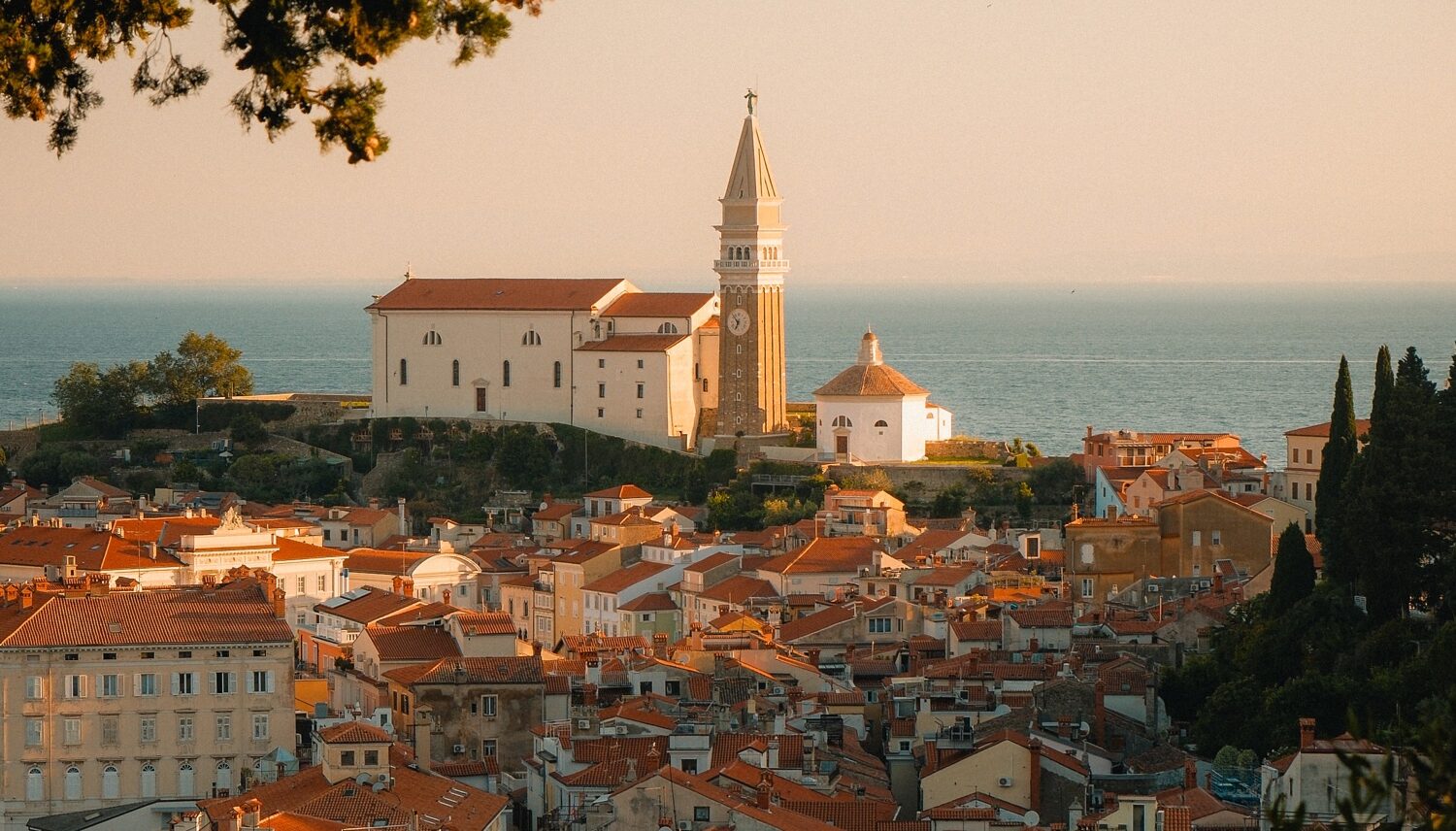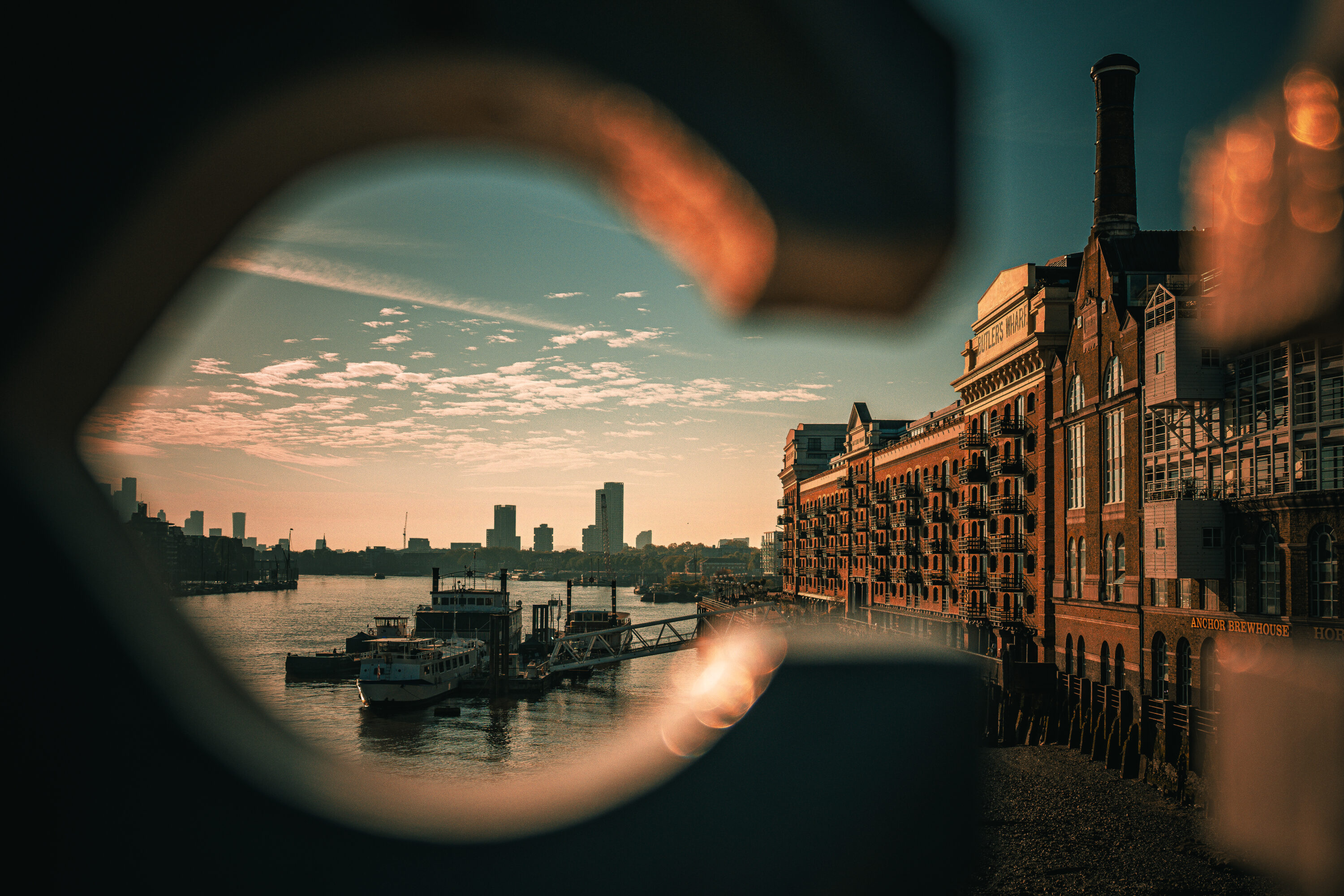
Martien Aerts knows exactly where to stand. The Dutch photographer works out of Eindhoven under the name M10foto, and he builds his portfolio in series rather than single frames. His architecture and street photography sit side by side: concrete geometry in Rotterdam, warehouse bridges strung across an alley at Butler’s Wharf, longboarders caught mid-air in a skate hall, a street kitchen steaming in Vietnam, New York traffic smeared into pure color.
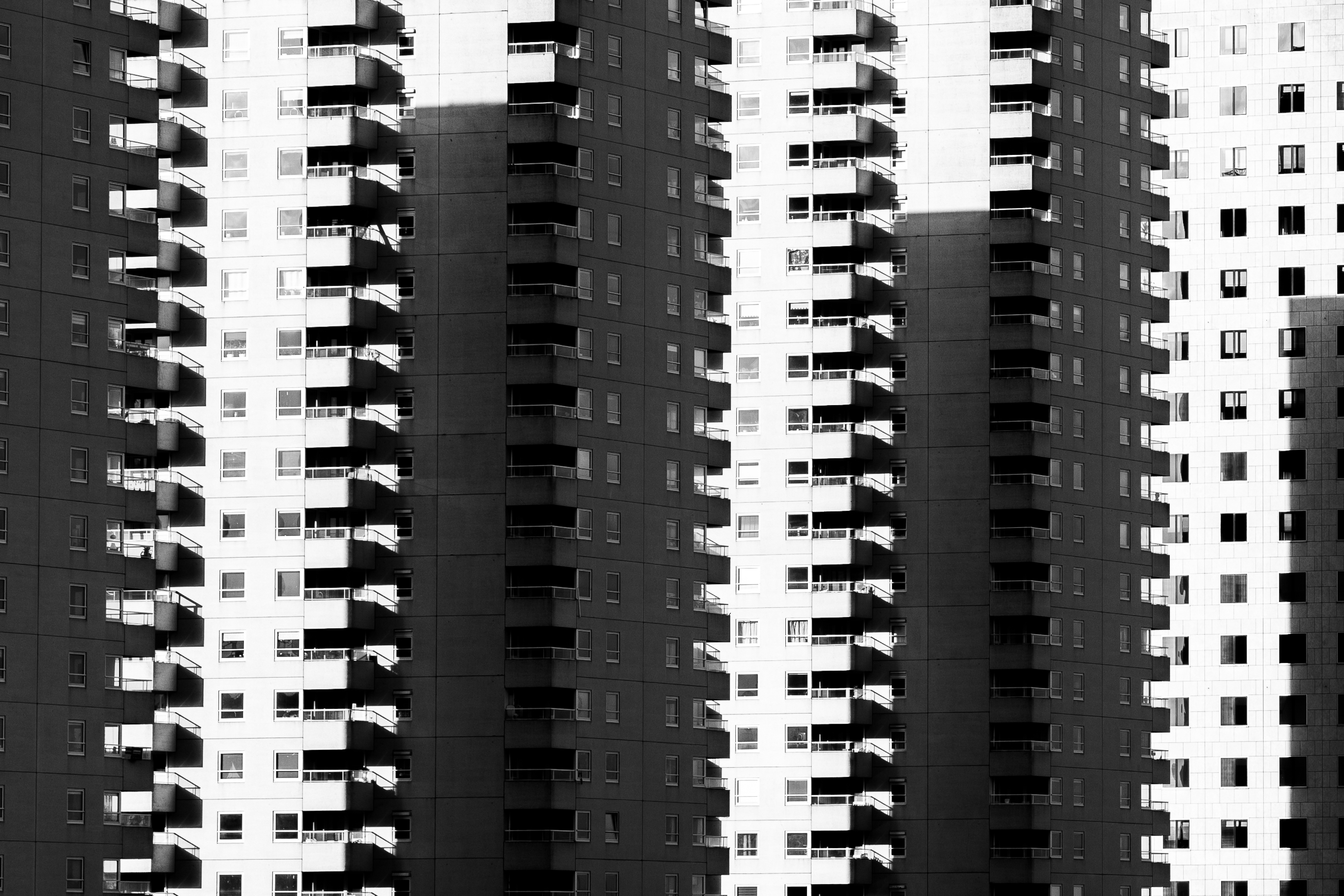
He moves between black and white and color without much ceremony. His own line about the work is hard to improve on. The heart leads, and the mind figures out how to follow.
We spoke with Martien about working in series, waiting at the right wall, and what he is actually looking for when he raises the camera in a crowd.
How M10foto Got Its Name
Martien, let’s start at the beginning. How did photography get its hooks into you? And while we are here, where does the name M10foto come from?
I have taken pictures and been captivated by it for most of my life, like many others. But photography became serious for me relatively late. I have always been visually oriented. At some point, taking pictures changed from recording where I had been into actively looking for light, energy and shapes. That is a very different thing.
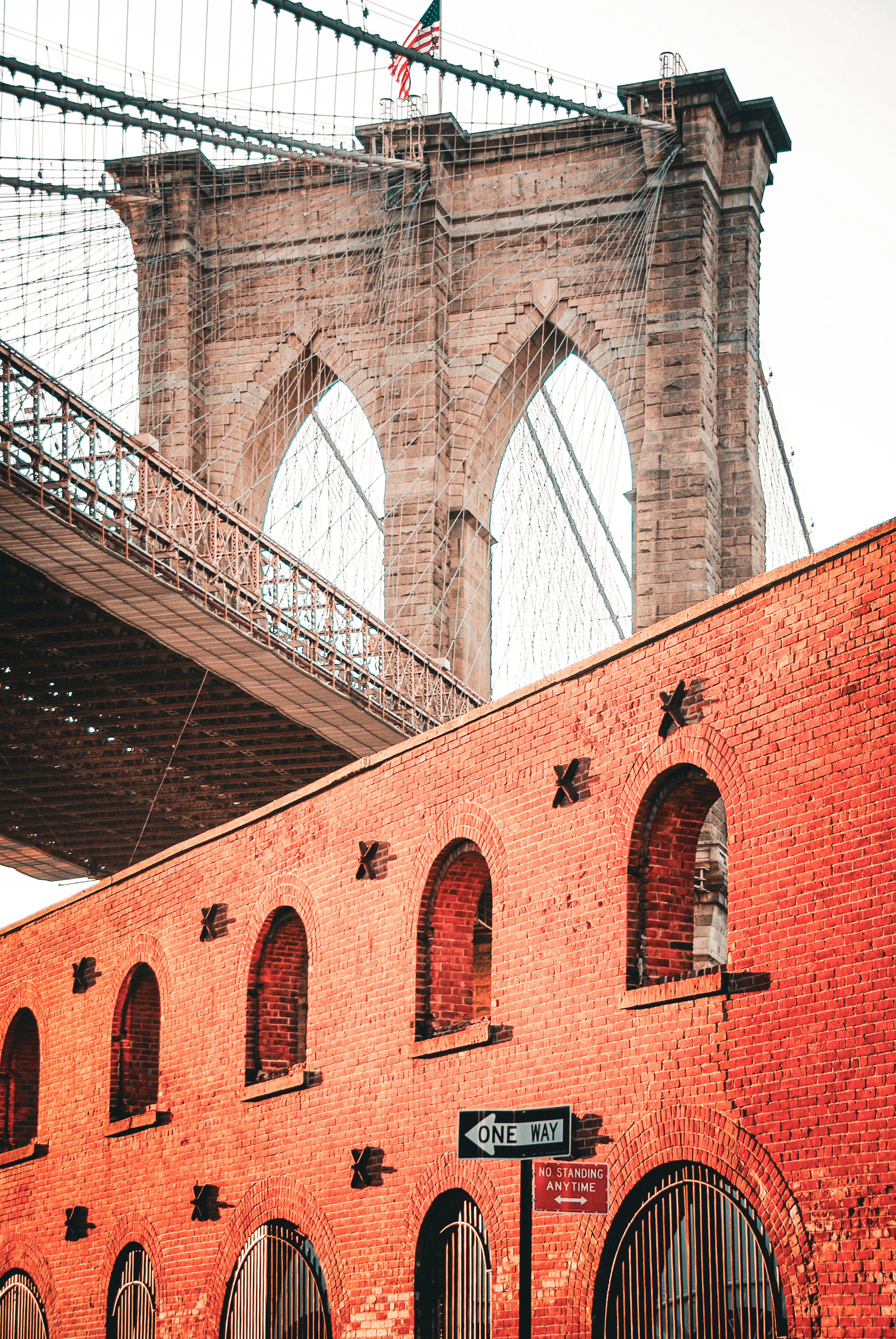
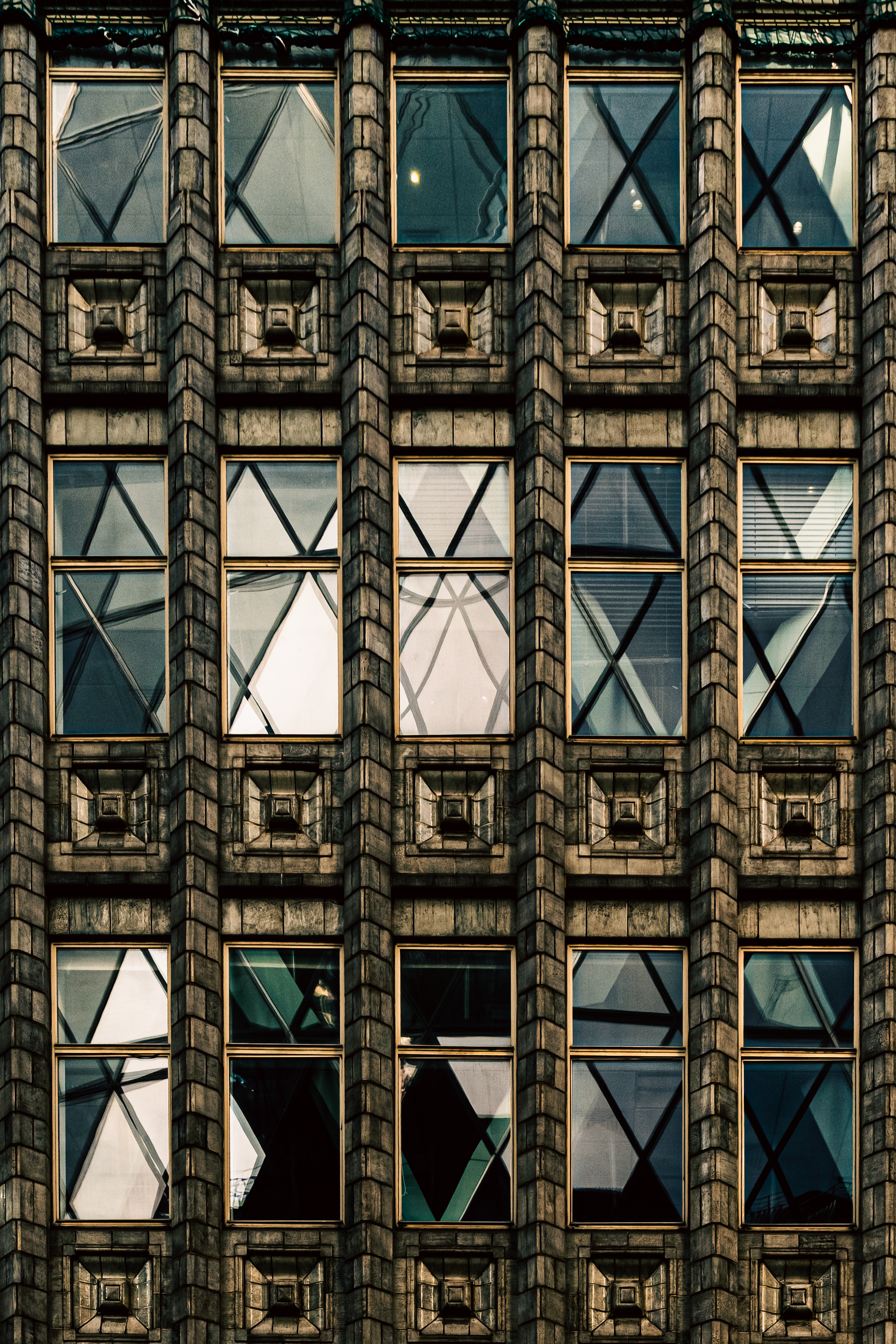
Architecture and street photography probably accelerated that. Architecture appeals to the rational part of me: lines, rhythm, repetition, symmetry, finding order in something that is already there. Street photography does almost the opposite. You can find the perfect composition and light, but then you need life to walk into it. That combination of control and coincidence still fascinates me.
Later, events added movement and energy to this. Music and sport, mostly. I go to sports and music events very frequently for leisure, and my love of photography sometimes just takes over. Instead of standing in front of the stage, I find myself more and more behind the lens. Apparently I am not very good at choosing one genre and sticking to it. Not yet, anyway.
M10foto translates directly to my full first name in Dutch: Martien. The last four letters, tien, mean the number 10 in Dutch. Skip the ar and you have M10. The rest speaks for itself, I guess.
Why He Builds Work in Series, Not Single Frames
Your website is not a feed. It is eleven named series. That is a rigorous way to organize a body of work, and most photographers never bother. Do you set out with a series in mind? Or do you shoot for months and notice the thread later?
Usually the photographs come first, and the series reveals itself later. To be honest, I still sometimes struggle with whether this is the best way to present my work. The series change over time. I recently deleted a few, because new work was asking for room.
I rarely go out thinking, today I am going to make chapter seven of a coherent body of work. That sounds much more organized than the reality. I photograph what catches my attention. After a while, I start seeing relationships between images: a color, a shape, a certain kind of light, movement, isolation, repetition.
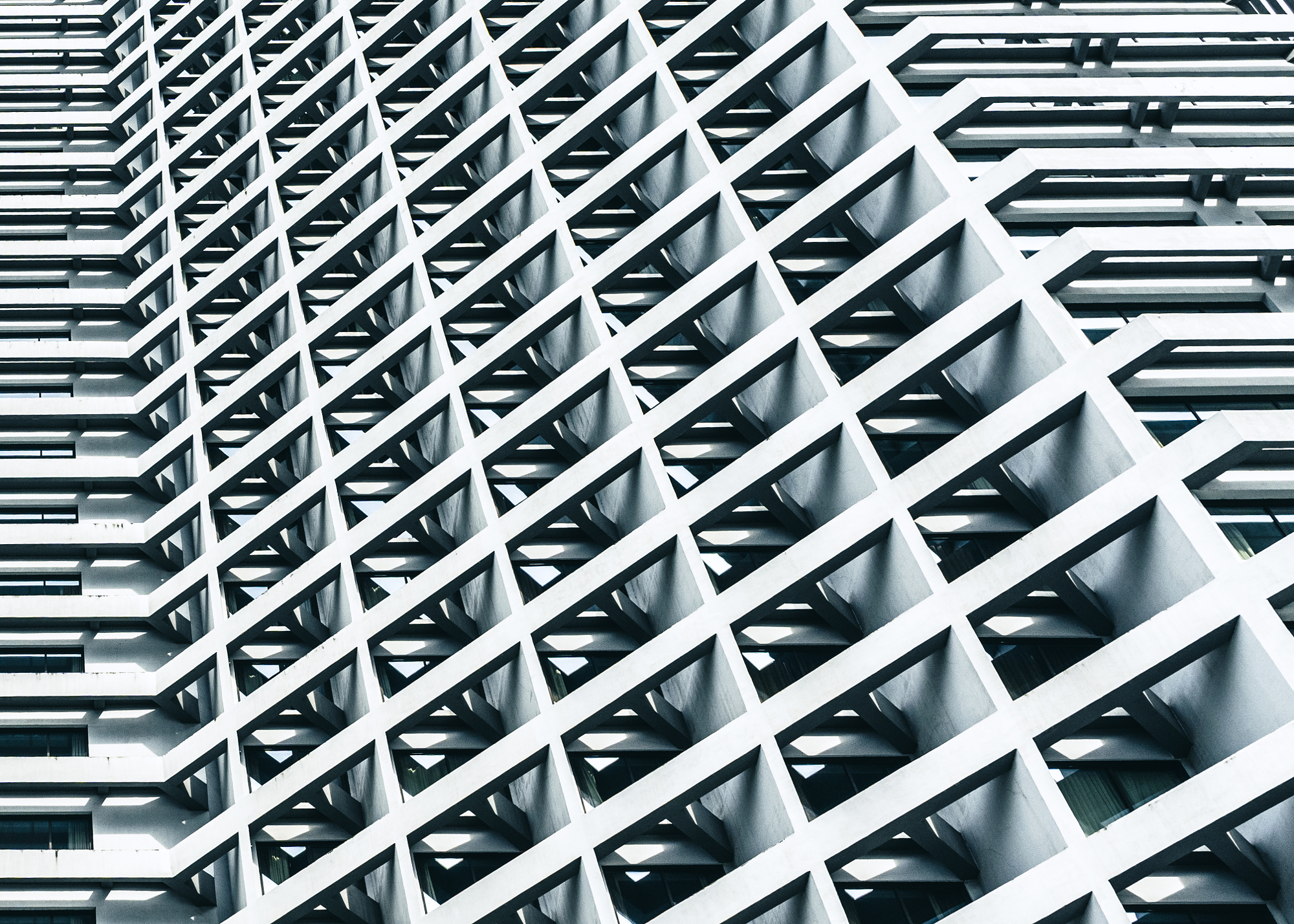
That is where my more rational side enters. Taking the photograph is often intuitive. Editing and building a series is much more analytical. I like asking why two images belong together, and why another one does not, even if it is a strong photograph.
A series also allows individual photographs to become part of a larger thought. That interests me much more than putting my latest twenty images in chronological order. My website isn’t a diary. It is more of an edit.
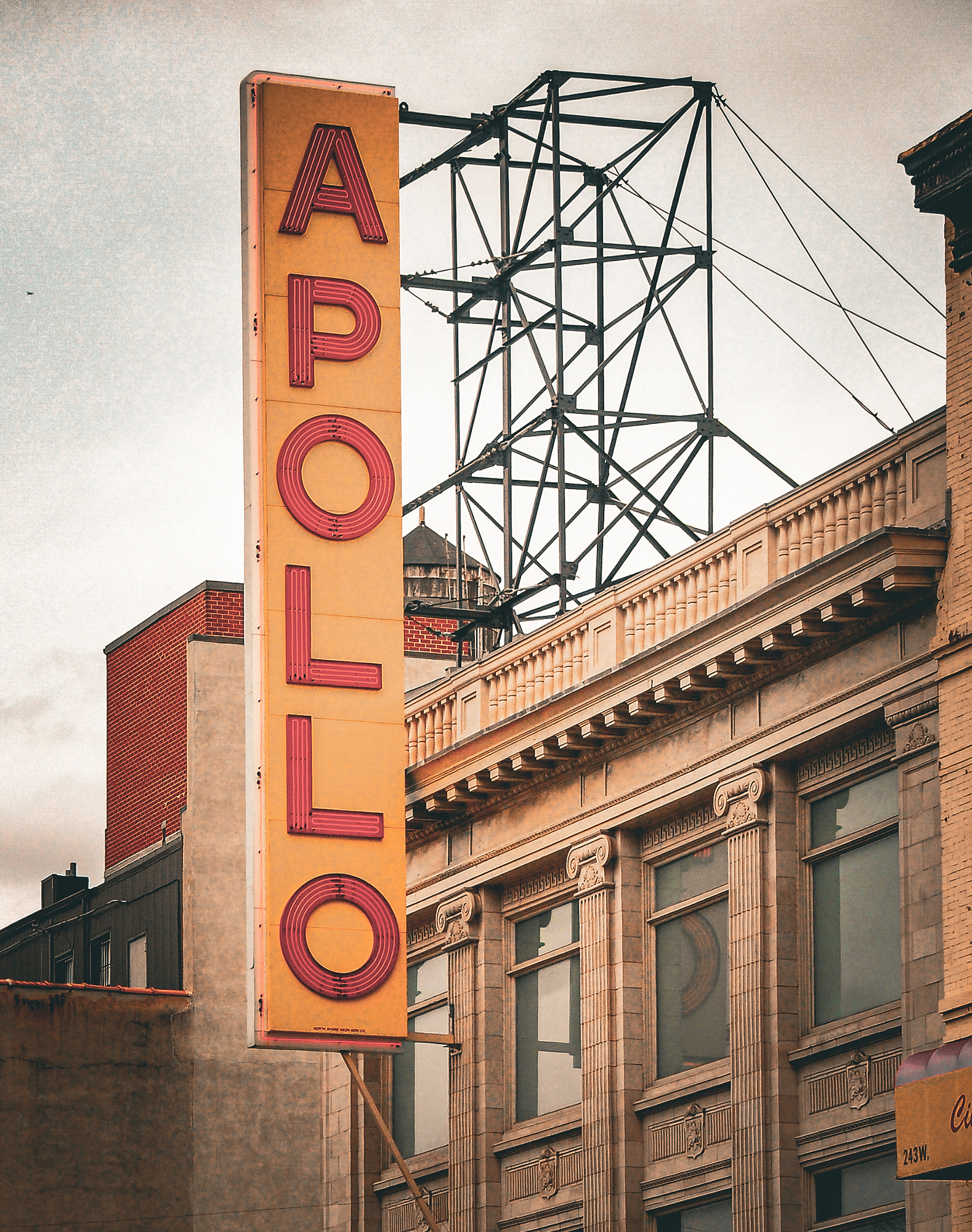
Sometimes I leave the house with focus. A New Horizon is a study of the first skyscraper in Eindhoven. Sometimes I leave the house as a tabula rasa, open to anything that crosses my path. That is how Small Stories happened.
Setting a Trap in Den Bosch
There is a set of frames you made in Den Bosch, against a wall of repeating concrete pyramids. Same wall, same light, different strangers walking through it. That is closer to setting a trap than to hunting. What does that give you?
Setting a trap is actually a very accurate description.
This series was a total coincidence. I had a network meeting in Den Bosch for my other job, and I took my camera along for afterwards. Then all the trains to Eindhoven were cancelled, so I had to call my wife to pick me up. While I waited, two things happened.
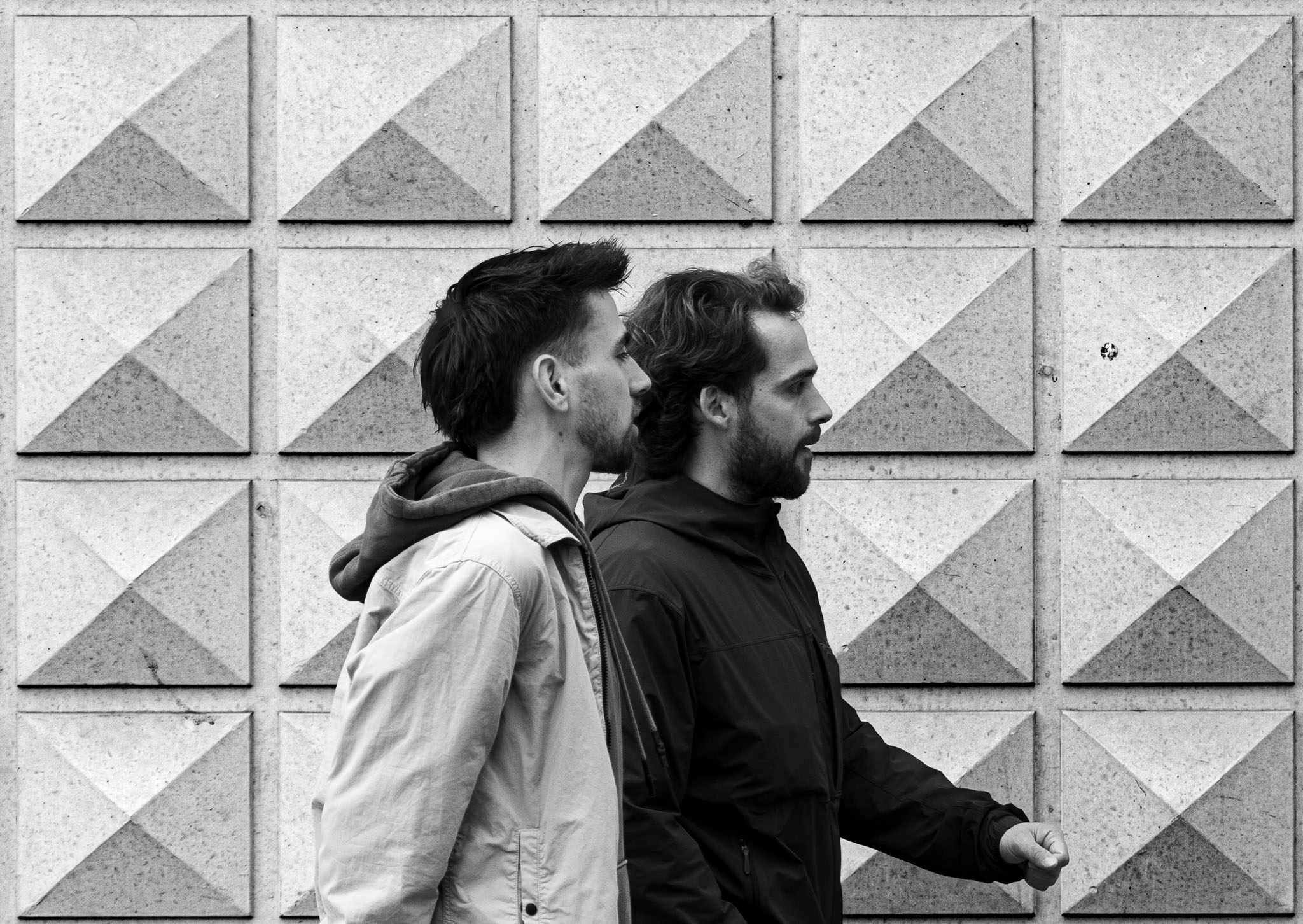
First, I got talking to some longboarders. They told me the World Championship Longboarding was in Eindhoven that weekend, which is where the longboard event photos came from. Then I waited some more, and suddenly I saw this wall with the concrete pyramids. I just started shooting.
Sometimes I find the photograph before the photograph exists. The architecture, light and composition are already there, but something is missing. Usually a person. Then the job changes from searching to waiting.
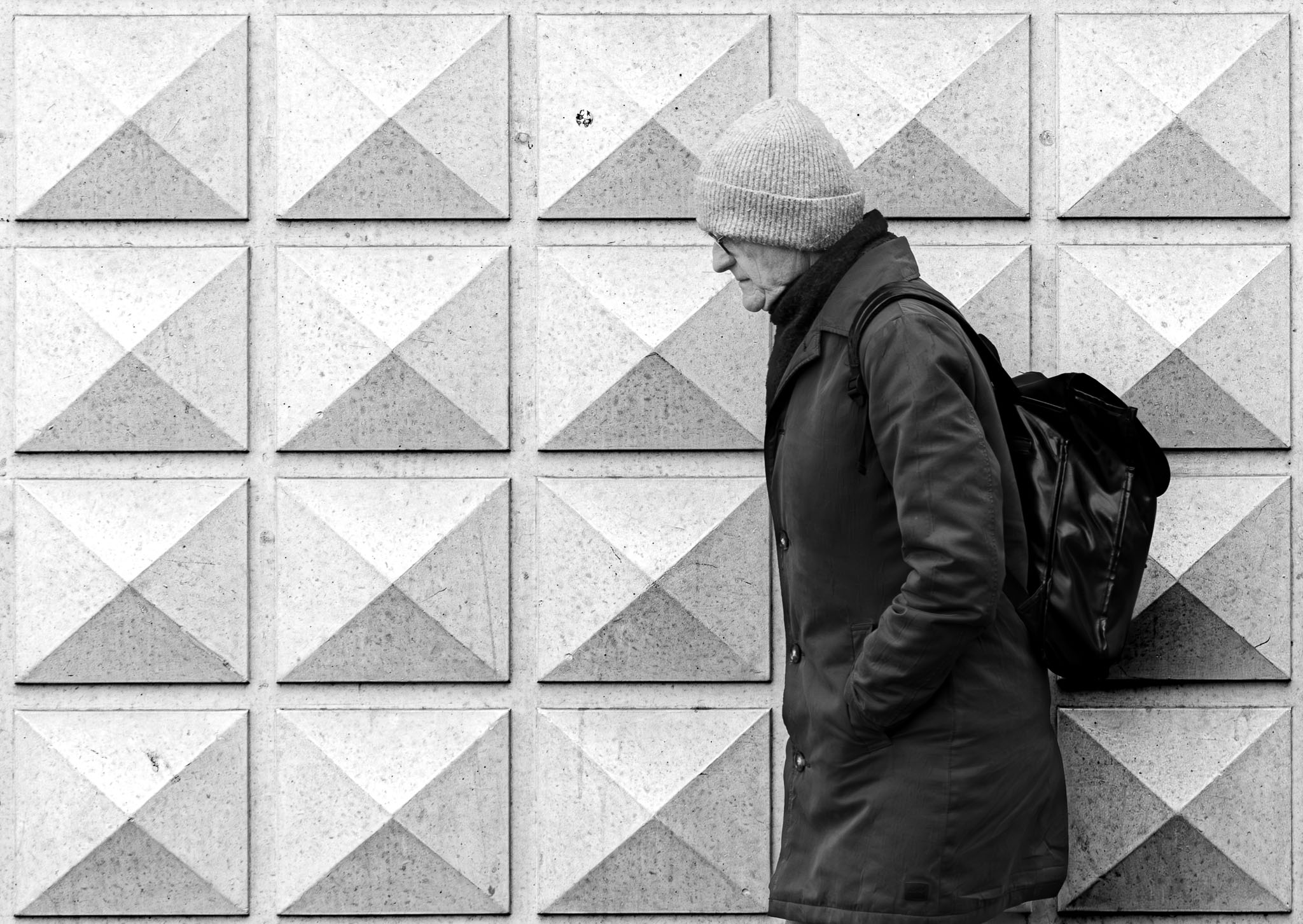
What I like about that is that I can control almost everything except the one thing that eventually makes the picture interesting. I know where the person needs to be. But I don’t know who will appear, what they will wear, how they will walk, or whether they will suddenly stop to check their phone in exactly the wrong place.
How Long He Will Wait
I can be surprisingly patient when I believe in a composition. But there is a point when you have to admit that the universe has apparently not received your creative brief.
And then I leave. Usually after waiting slightly longer than I should have.
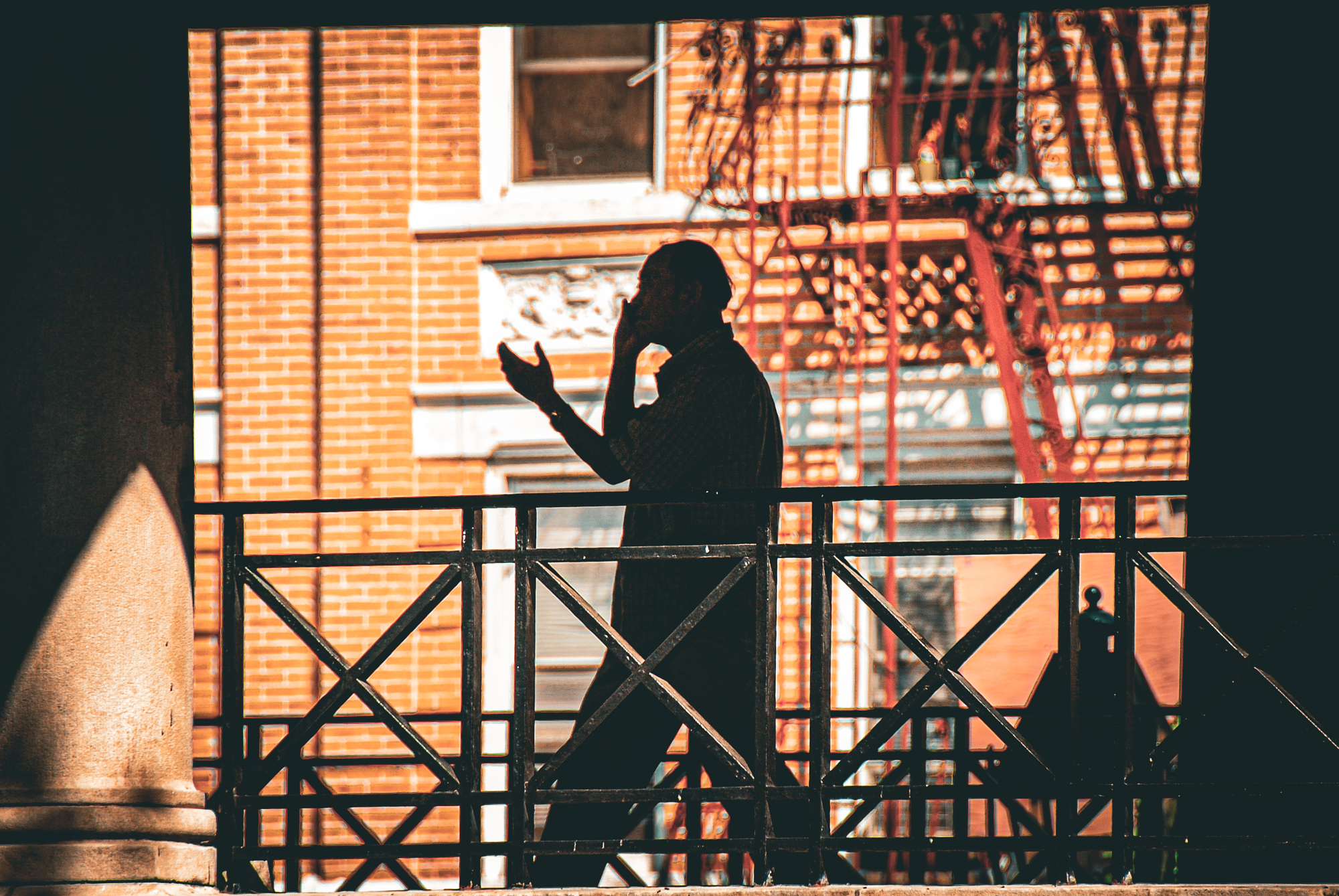
Knowing Exactly Where to Stand
You have said the heart leads and the mind figures out how to follow. In photography, that means knowing exactly where to stand. It is a lovely line. Now give us the unglamorous version. When you arrive somewhere, how do you actually find the spot?
Most of my shots are below par. Read: bad. On a good day, 10% makes the edit and 5% makes the series. Sometimes they are both zero.
So the unglamorous version involves a lot more walking backwards, forwards and sideways than the quote suggests.
When I arrive somewhere, I usually react intuitively first. I walk around and try to feel a place instead of shooting straight away. I try to see how the light will move while I am there. Only then do I look for angles.
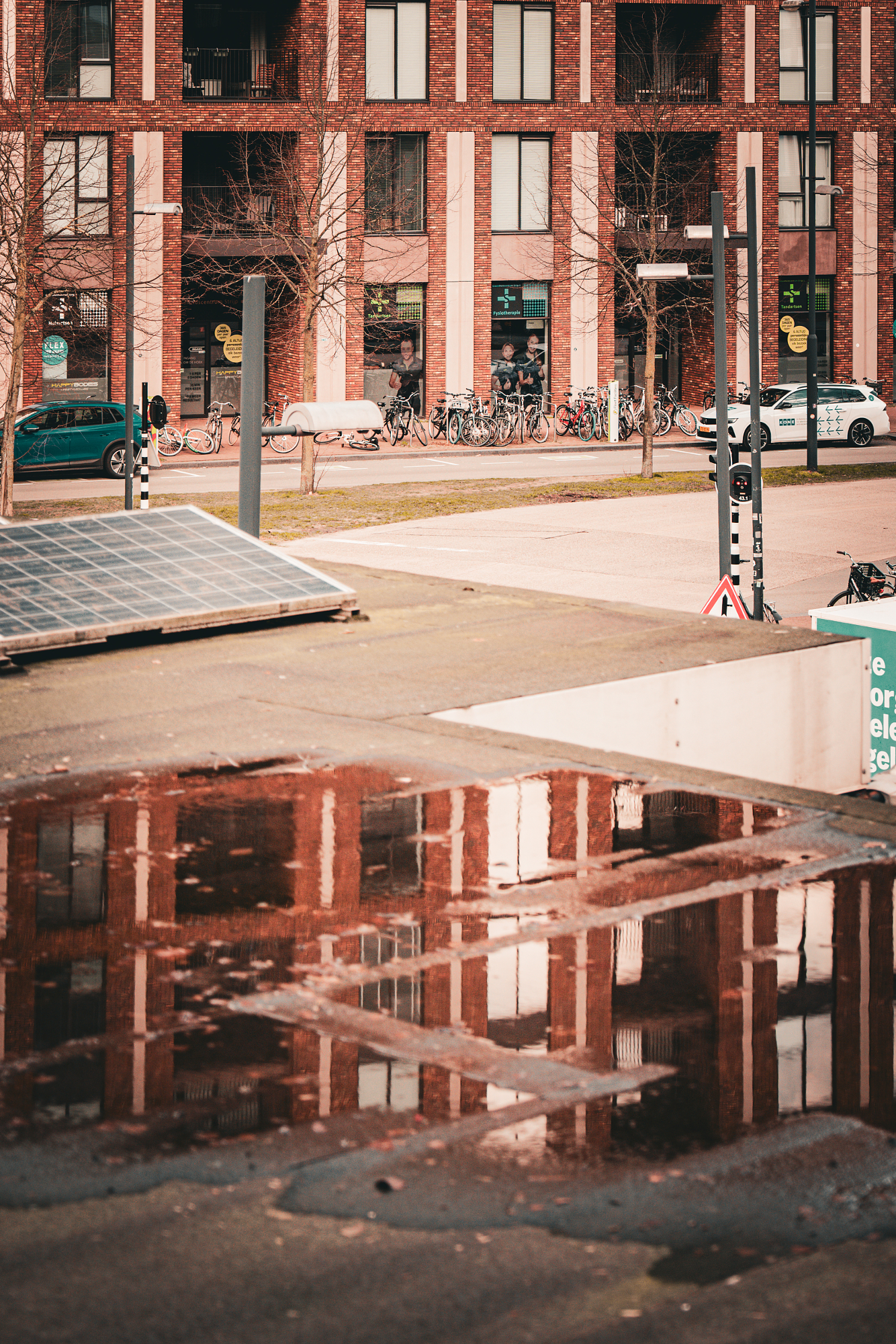
Something catches my attention: light, a line, a color, a reflection, the relationship between two buildings. Then I start moving. A few meters left, lower, higher, closer, further away. I remove things from the frame until I understand what interested me in the first place.
That is what I mean by the heart leading and the mind following. The first reaction is emotional: there is something here. The rational part then has to solve the problem of turning that feeling into a photograph.
My first instinct is often right about what is interesting, and regularly wrong about where I should photograph it from. Which is useful. If the first position were always perfect, photography would involve considerably less movement.
So knowing where to stand is a continuous awareness of my surroundings, and hoping I hit the sweet spot a few times.
Frozen or Blurred: How He Shoots Movement
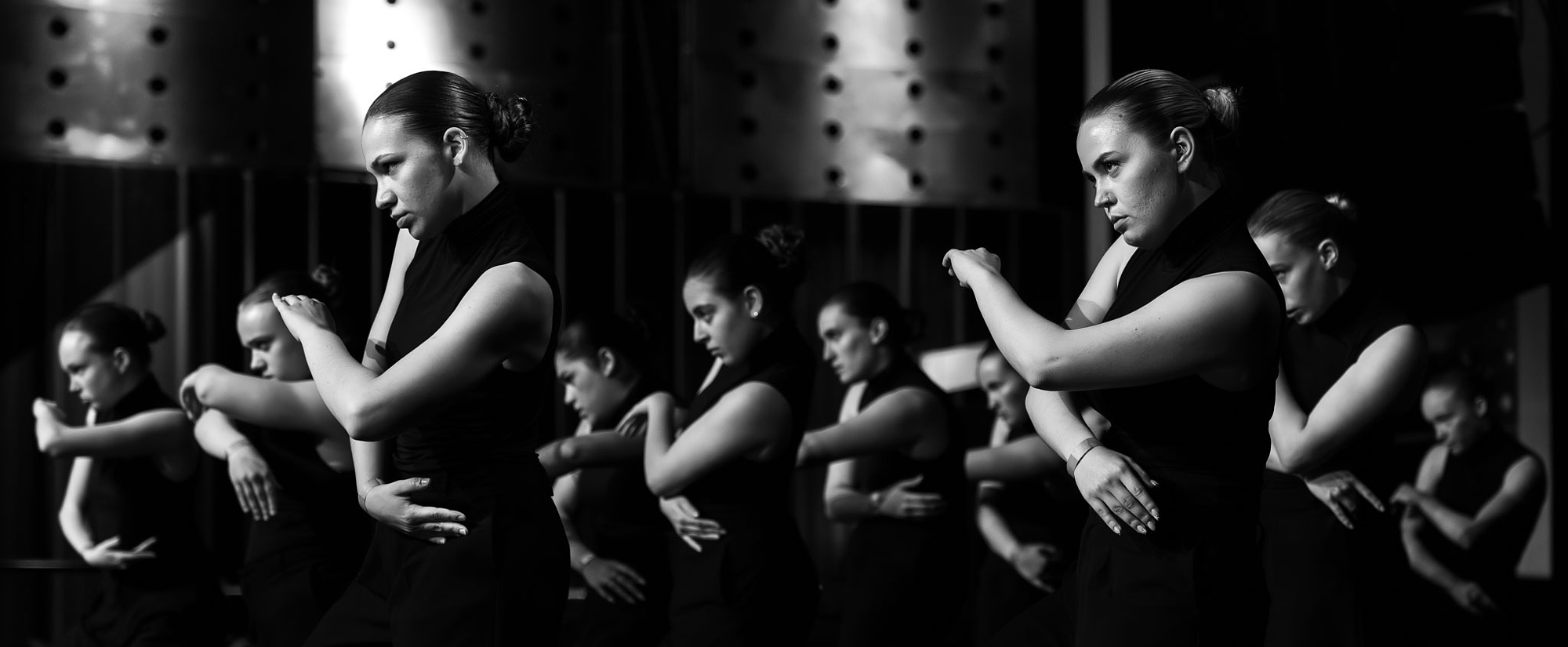
A lot of your work is about bodies in motion. Longboarders in the air, dancers on a stage, traffic dissolved into streaks of yellow and red. Some of it is frozen and some is deliberately smeared. What decides which?
A lot happens intuitively. It also depends on what I think the movement is actually about.
With a longboarder in the air, freezing the action can give you everything: tension, body position, height, concentration. The fraction of a second is the story. The same goes for dancing.
At other moments, freezing everything removes the feeling I experienced. Then blur becomes useful. It can show direction, speed, rhythm or chaos in a way that a technically perfect frozen frame cannot.
So I don’t really see sharpness as the goal, although I love it very much. It is one of the tools.
The question is whether the photograph should show what happened at one thousandth of a second, or what those few seconds felt like. Sometimes those are the same picture. Often they aren’t.
How Client Work Sharpens Personal Work
You shoot assignments around Eindhoven alongside the personal series on your site. Those are two different jobs with two different definitions of a good picture. Does the commissioned work sharpen the personal work?
They definitely sharpen each other.
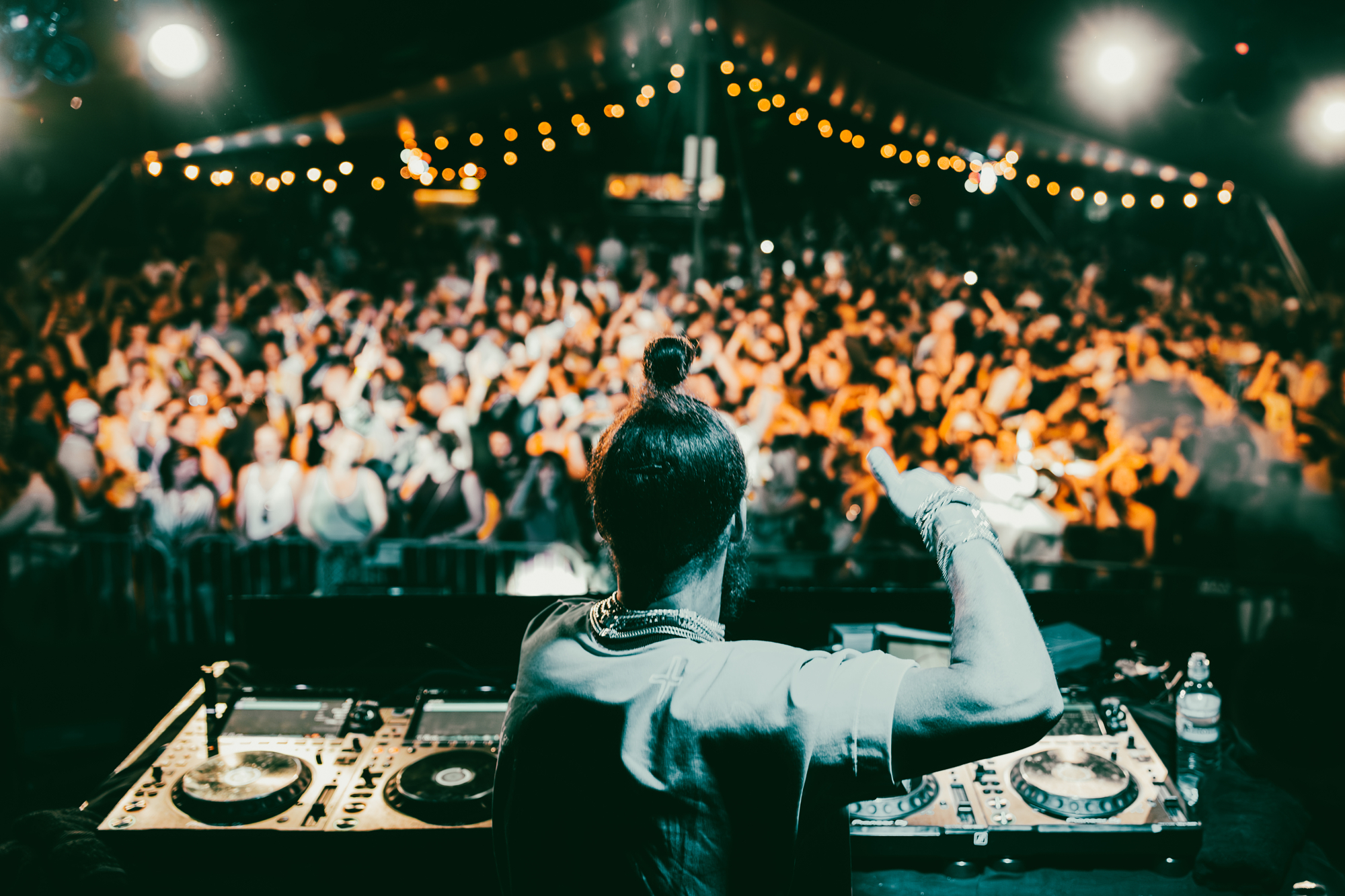
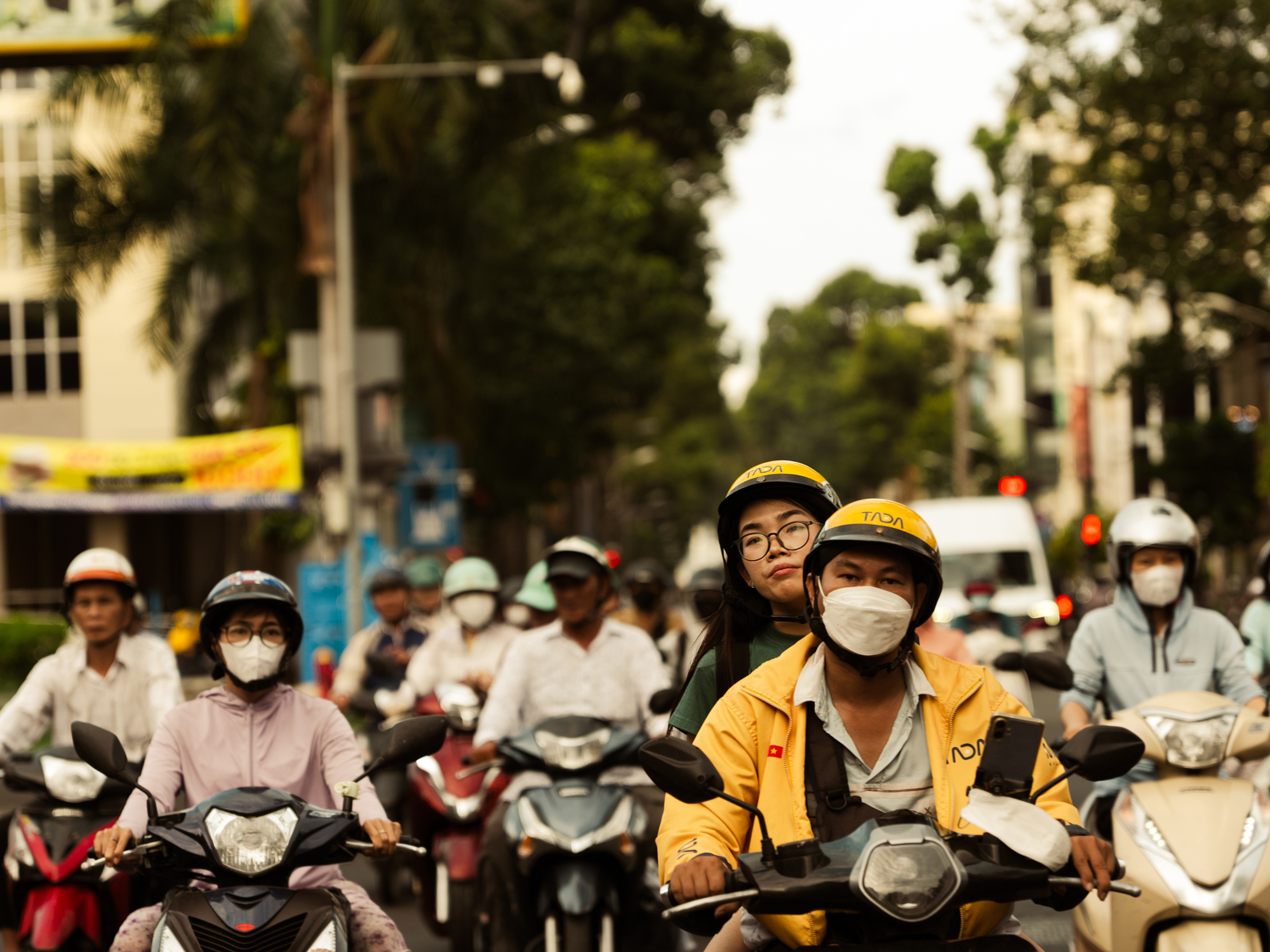
On an assignment, the photograph has a job to do. At a festival, dance event or sports competition, I cannot spend forty minutes waiting for one person to walk past the perfect piece of concrete. There is a client, an event is unfolding, important moments happen once, and I need to deliver a complete story.
This forces me to make decisions quickly. It has made me better at anticipating movement, reading people and recognizing when something is about to happen. The editing has more urgency too, so commissioned work keeps sharpening those skills.
Personal work gives me the opposite freedom. Nobody needs the photograph. I can wait, experiment, fail, or come home with three images I really like instead of three hundred that prove I was there.
My professional background probably plays a role too. I have spent much of my career working with organizations, leadership and change. You learn to look for patterns, relationships and what is happening underneath the obvious activity. Photography isn’t completely different. The advantage is that buildings and the street rarely schedule another meeting to discuss it.
The One Thing Every Frame Needs
Architecture and street photography, portraits, live music, sport, travel. Most photographers narrow their focus over time. You have gone the other way. What is the common denominator?
Energy.
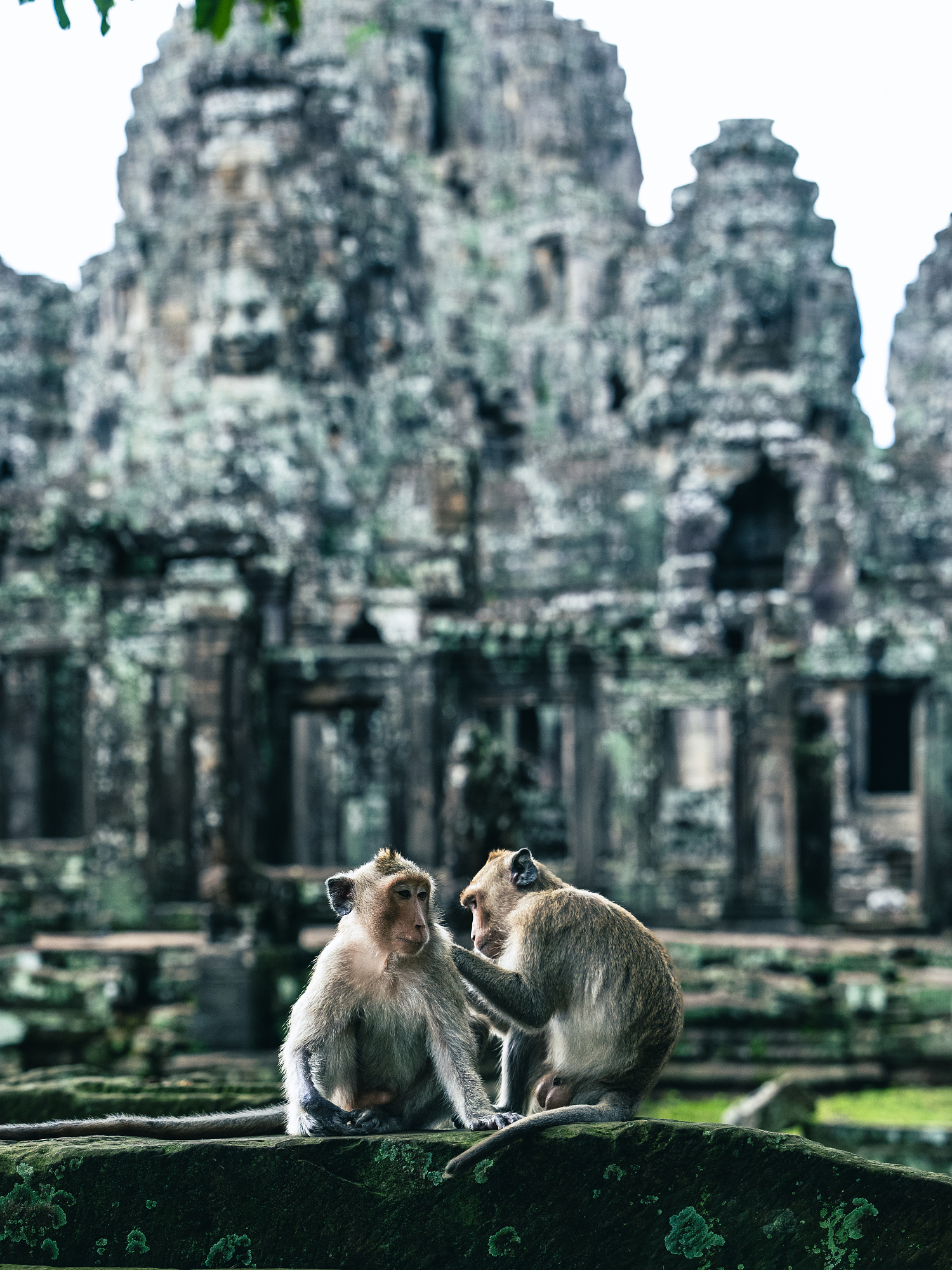
That may sound strange when some of my photographs are of completely static buildings. But energy doesn’t necessarily mean movement. It can be tension between shapes, a person isolated in a large space, light hitting a surface, or two colors that suddenly work together. Sometimes it is a question that arises when you look at the picture, or a crowd moving one way while one person does something else.
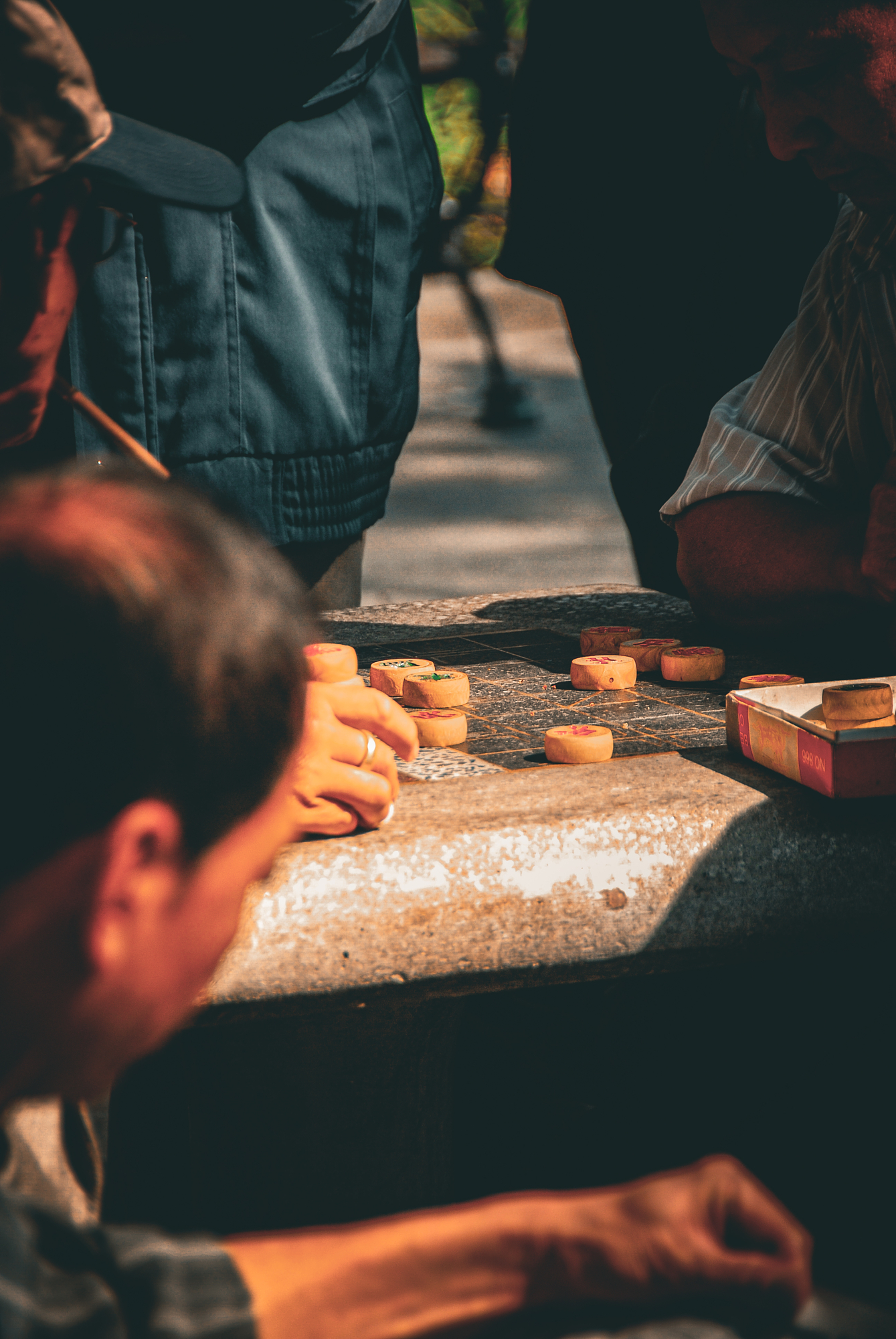
I am looking for some kind of relationship that makes the frame feel alive.
That is probably why I don’t feel a strong need to choose between architecture, street and events. The subject changes, but the search is surprisingly similar.
And sometimes, to be fair, something is simply beautiful. I think some photographers occasionally work very hard to invent a profound explanation for that. I am perfectly happy to just take the picture.
Strangers and Scale in Architecture and Street Photography
The strangers in your street work are almost never looking at you. They are in profile, mid-stride, small against a facade. Often they seem to be completing a shape rather than starring in a picture. Are you photographing the person, or the composition they walked into?
Usually the composition they walked into. Or the possible story they represent while unaware of the lens.
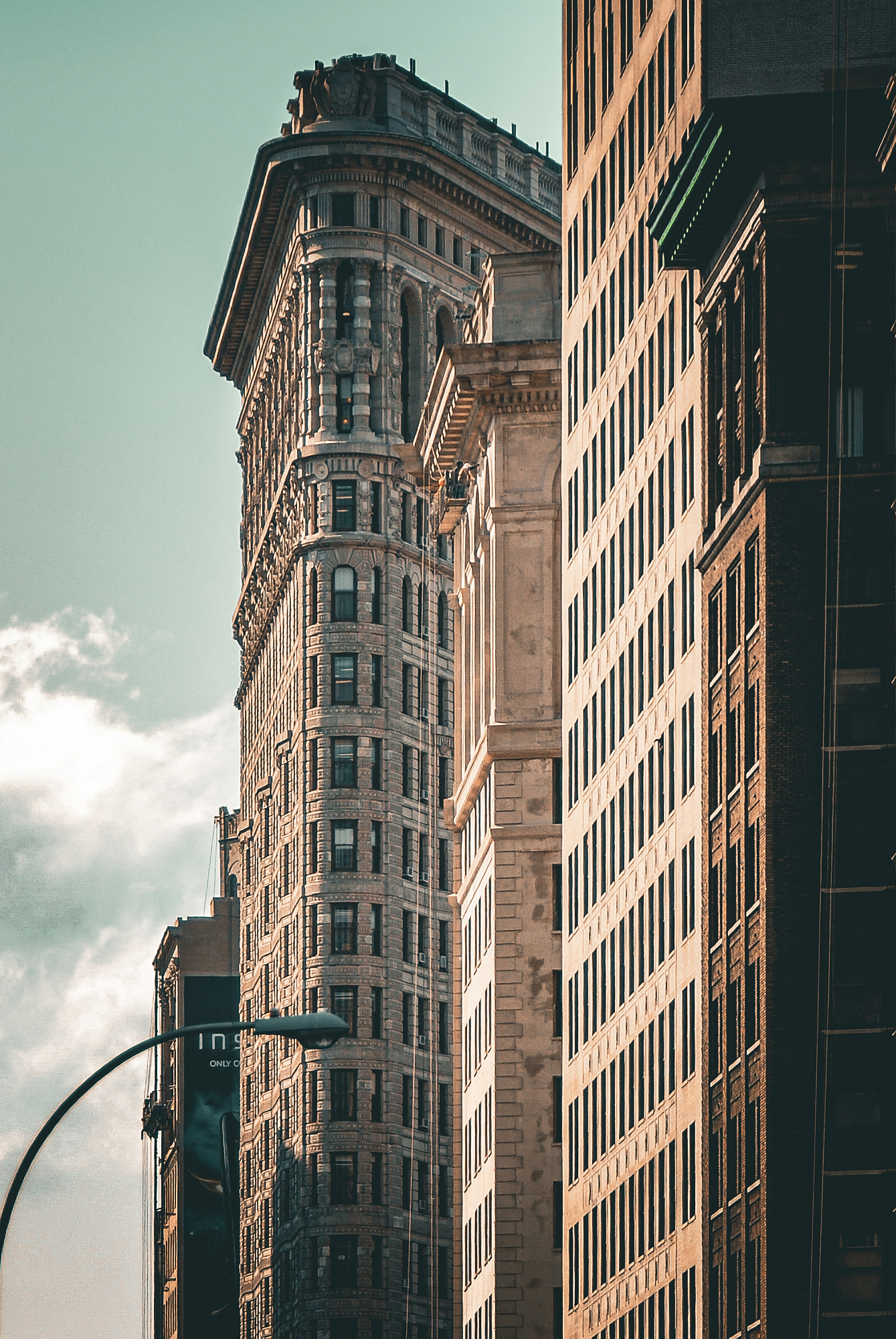
In much of my street photography, the person is not really a portrait subject. They are scale, movement, contrast, or sometimes the final geometric element in the frame. I may have been looking at the wall, the shadow or the architecture long before they arrived.
But I don’t think that makes the person unimportant. Quite the opposite. A perfectly organized architectural photograph can feel sterile until one human being enters it. Suddenly there is scale, vulnerability, direction and a small suggestion of a story.
There is also something I like about people not performing for the camera. I am interested in that fraction of a second when somebody is simply passing through a place, unaware that all the elements have briefly fallen into position for me.
Does it trouble me? Not really. Although I do think street photographers have a responsibility to retain some humanity. A stranger may be an element in my composition, but they are never just an object. Often I show them the picture afterwards, and send it to them if they like it.
A Question From Gonzalo Bendito
We have a question from a previous featured photographer, Gonzalo Bendito, who asked: do you tend to share your photography locations with others, or do you prefer to keep it to yourself?
Absolutely I share.
A location isn’t a photograph. Give ten photographers the same corner of the same street at the same time and you will get ten different interpretations. Hopefully.
I am happy to tell someone where I made an image. Knowing the coordinates doesn’t give you the light, the weather, the person who happened to walk past, the way I decided to frame it, or my eyes. For me it is not a competition. It is about growing, and about enabling others to grow.
And if someone goes there and makes a better photograph than mine, keeping the location secret probably wasn’t going to save me anyway.
What Comes Next
Martien, thank you for taking the time. To close, is there a new series or shoot on the horizon that you would like to point our readers toward?
I don’t have one grand project that I can dramatically unveil yet.
What interests me at the moment is bringing the different sides of my photography closer together. The precision and structure I find in architecture, the unpredictability of the street, and the energy I experience in events and travel don’t feel like separate worlds anymore.
I also want to keep developing the idea of working in series rather than chasing individual hero images. A photograph can be strong on its own. But I increasingly enjoy what happens when ten or fifteen images start having a conversation with each other.
And there will definitely be more travel. Traveling with a camera is still one of the best excuses I know for walking, driving or flying enormous distances while pretending there is a plan.
See More of Martien Aerts
To see more of Martien’s architecture and street photography, visit his 500px Profile, explore the series on his portfolio site, and follow him on Instagram at @m10foto.